
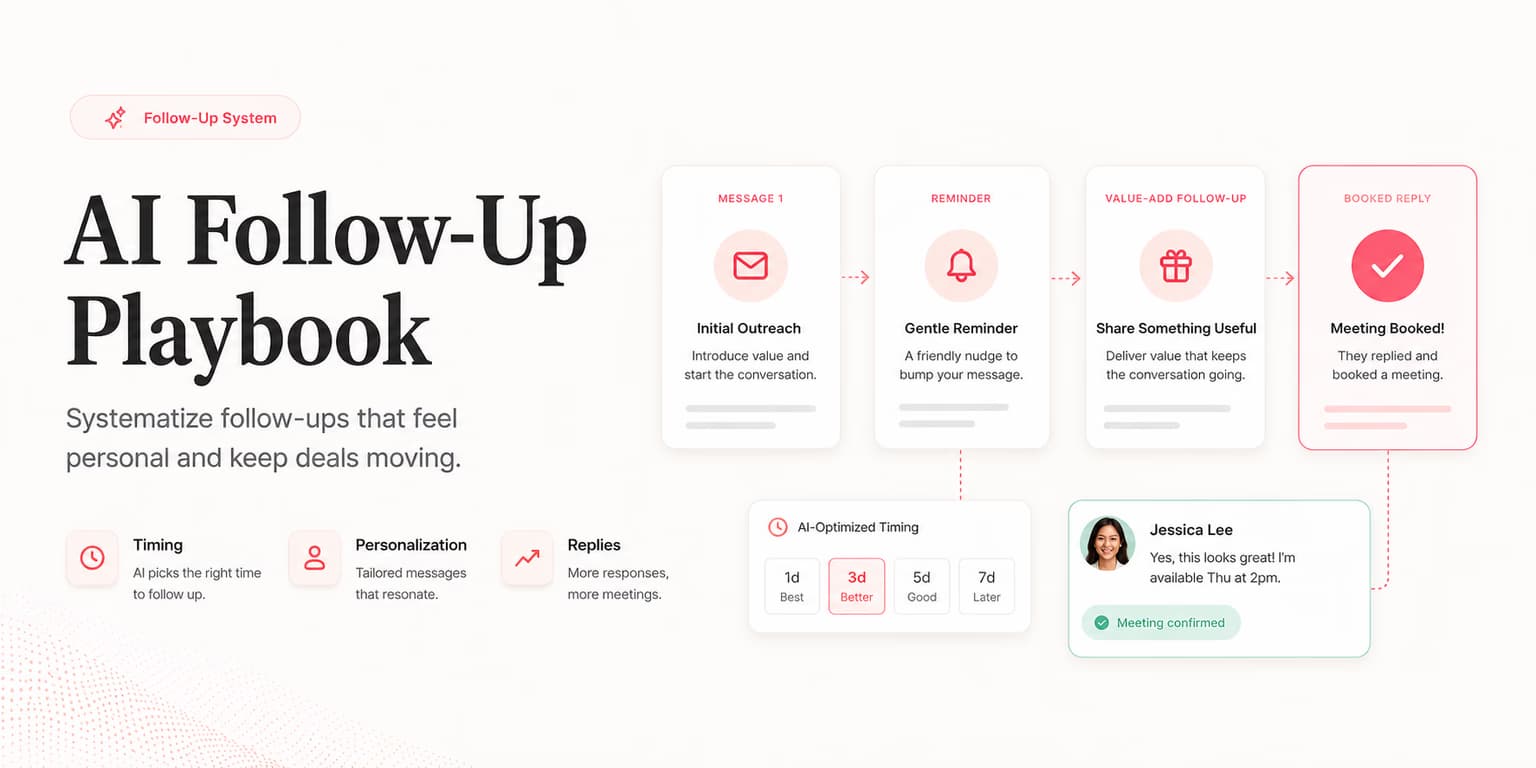
AI follow-up should not mean "send more reminders." It should mean the system remembers the conversation, understands the buyer's intent, and proposes the next useful move without pressuring the prospect.
That matters most on LinkedIn, where the same thread can move from cold outreach to objection handling to demo scheduling. If your automation treats every unanswered message the same way, it will sound robotic even when the copy is short.
This playbook is broader than a ghosted-lead template. For specific re-engagement language, read the guide to re-engaging ghosted LinkedIn leads. Here, the goal is the operating system: memory, intent, cadence, draft quality, and stop rules.
AI should remember context
The useful part of AI follow-up is memory. A human seller can forget which problem started the conversation, which resource was promised, or whether the buyer said "circle back next month." A good AI system should not.
But memory is only useful if it is structured. A long transcript is not enough. Before drafting the next touch, the AI needs a concise summary of the thread and a clear decision about what state the buyer is in.
A useful follow-up assistant should answer four questions before it writes a single word: why did we contact this person, what happened last, what is the buyer's likely intent, and what action would be respectful now?
Follow-up principle
The next message should be impossible to write correctly without knowing the previous message. If the follow-up could be sent to anyone, it is not a follow-up.
This is where Omentir's intent-sorted inbox matters. When replies are grouped by interest, objection, referral, and timing, the AI can draft from the actual conversation state instead of guessing from silence.
Build the memory card
Give every active prospect a memory card. This is a compact record the AI can read before drafting or deciding whether a follow-up is due.
The memory card should not contain every detail. It should contain the details that change the next action.
- Original trigger: the observable reason this lead entered the campaign.
- Buyer problem: the pain or workflow the conversation is about.
- Last touch: what was sent, when, and what question was asked.
- Buyer state: no response, interested, objection, referral, not now, or booked.
- Promise made: any resource, calendar link, intro, or follow-up timing you committed to.
- Risk note: anything not to mention, such as unproven claims or sensitive assumptions.
Without the risk note, AI follow-up can become too confident. It may infer budget, pain, or urgency from thin evidence. A good memory card prevents that by telling the model what is known and what must not be claimed.
Memory card: "Lead accepted after hiring-trigger outreach. Problem angle is scaling customer success handoffs. Last message asked whether handoffs are still spreadsheet-driven. Buyer has not replied. Do not claim churn or renewal risk."
The memory card also gives your team a fast approval checklist. Before a draft is allowed to send, the reviewer should confirm that the AI used the original trigger, did not invent new pain, respected the last buyer state, and asked one easy question. If any of those checks fail, edit the memory card before editing the message.
A reusable prompt can keep this review consistent:
"Review this follow-up draft against the memory card. Flag any invented claim, missing context, pressure language, or mismatch with the buyer state. Then suggest one shorter version that preserves the original trigger."
This prompt is intentionally not asking the AI to be clever. It asks the AI to be conservative. That is the right posture for follow-up because the relationship already exists, even if it is thin.
Sort by intent
Follow-up quality improves when the AI classifies intent before drafting. The same delay can mean very different things. A buyer who asked for pricing and went quiet deserves a different next step from someone who never answered the first message.
Use intent buckets that map directly to action.
| Intent bucket | What it means | Next action |
|---|---|---|
| No response | They accepted or received the message but never engaged. | Add one new useful angle, then wait. |
| Interested | They asked how it works, pricing, fit, or next steps. | Answer directly and move toward a qualified call. |
| Objection | They raised timing, budget, relevance, authority, or trust concerns. | Address the objection once, then ask a low-pressure question. |
| Referral | They pointed to another person or team. | Make the intro easy and preserve context. |
| Not now | They acknowledged relevance but delayed timing. | Set a respectful future reminder with a reason. |
Intent sorting is also a measurement tool. If most replies are objections, the first message may be overpromising. If most replies are referrals, you may be close on account fit but wrong on role ownership.
Cadence with judgment
AI can schedule follow-ups consistently, but consistency is not the same as judgment. A good cadence changes based on the buyer's state.
For cold LinkedIn outreach, use a light sequence: first message after acceptance, follow-up after several business days, one more value-add touch, then a polite close or nurture move. Avoid exact robotic intervals and avoid immediate bumps after acceptance.
Positive intent changes the cadence. If a prospect asks a buying question, respond quickly. If they ask for a future reminder, honor the timing. If they say not interested, stop the sequence.
- No response: wait several business days before adding a new useful angle.
- Interested: respond as soon as possible with a direct answer and next step.
- Not now: set the reminder they requested, not a generic drip.
- Objection: answer once, ask a clarifying question, then pause if they disengage.
This is why follow-up automation should be human-paced. The goal is not to maximize touches. The goal is to never miss the right touch.
Draft patterns
Once the memory card and intent bucket are clear, drafting becomes much easier. The AI should choose a pattern before writing the message.
New angle
Use this when the prospect has not replied. Add one relevant observation that extends the original problem.
"One thing I should have mentioned: teams usually feel this pain most once handoffs move from founder-owned to manager-owned. Is that transition already happening for you, or too early?"
Objection answer
Use this when they respond but hesitate. Acknowledge, answer briefly, and ask a question that reduces pressure.
"Totally fair on timing. If this is not active until next quarter, I will not push it now. Is the handoff issue likely to be owned by you then, or someone else?"
Referral assist
Use this when the buyer points you to another person. Make forwarding easy instead of asking them to write your pitch.
"Appreciate the pointer. If helpful, you can forward this: 'They are looking at CS handoff workflows for teams scaling past founder-led account management.' Happy to keep it lightweight."
These drafts should stay short. AI often adds too much explanation because it is trying to be helpful. The human review step should cut anything that does not make the reply easier.
Pause and stop rules
The safest follow-up playbook is defined as much by what it refuses to send as by what it sends. AI should pause a sequence when the prospect replies, books a meeting, asks for time, raises a sensitive objection, or gives a clear no.
Stop active follow-up after a small number of thoughtful attempts unless a new signal appears. A new signal can be a recent post, hiring change, product launch, funding announcement, or direct engagement with your content. Without new evidence, another follow-up usually creates pressure rather than value.
In Omentir, this philosophy shows up as human-paced outreach and reply-aware handling. Campaigns should not keep sending as if nothing happened after a buyer responds. The system should surface the reply, classify intent, and let the human take over the judgment-heavy moment.
For the full campaign setup that surrounds follow-up, use the AI outreach playbook. Follow-up is one part of that larger loop, not a separate trick.
Measure follow-up quality
Do not measure AI follow-up only by reply rate. A pushy breakup message can get replies while damaging trust. A better dashboard separates useful replies from irritated replies.
Track five numbers: follow-ups due, follow-ups sent, positive re-engagement, objections clarified, and sequences stopped correctly. The last one matters because good sales systems know when silence is the answer.
- High due count: your team is missing warm opportunities.
- Low re-engagement: follow-ups may be repeating the original pitch.
- High objections: the first message may be creating confusion.
- Low stop accuracy: automation is continuing where a human would pause.
Review follow-up performance weekly. Pull a few examples from each intent bucket and ask whether the AI remembered the original context, added one useful detail, and respected the buyer's state. If the answer is no, fix the memory card or the intent rules before sending more.
A good follow-up system remembers what happened, suggests the next respectful move, and keeps useful conversations from dying because nobody replied.
FAQs
AI can draft and schedule follow-up tasks, but high-risk messages should stay reviewable. For LinkedIn, human-paced sending and clear pause rules matter more than raw automation.
For most cold LinkedIn conversations, two or three thoughtful follow-ups after the first message is enough. More only makes sense if the prospect shows fresh intent.
It should remember the original trigger, previous message, prospect response, intent bucket, promised resource, timing note, and anything the prospect asked you not to do.
Ghosted-lead re-engagement is one scenario. This playbook covers the whole follow-up system: positive replies, objections, referrals, not-now replies, no response, and stop rules.