Online
B2B online marketing when the buyer never walks into your office
Website, search, and remote buying: how companies sell when the evaluation happens in a browser, not on a plant floor or a showroom.
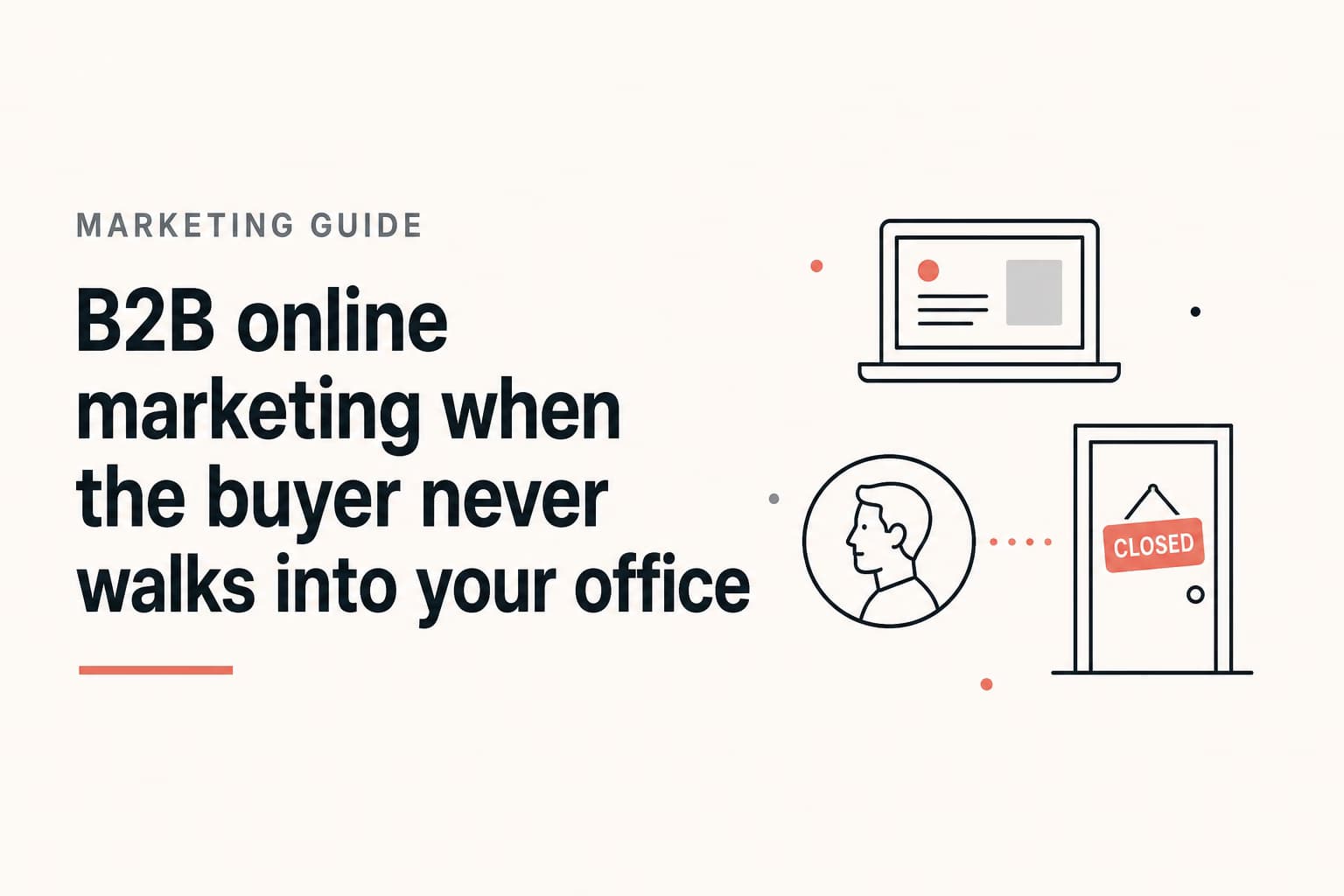
The office is optional. The site is not.
People who search 'online marketing' in a B2B context are usually asking how to sell without a territory visit. The buyer researches on a laptop after hours, compares vendors in a shared doc, and may never see your building. Your website is the showroom. Search is how they find the door. Remote proof (recordings, docs, pricing logic, security pages) is what they pass around instead of a plant tour.
This is adjacent to digital marketing, but the center of gravity is different. Digital is the channel mix and the scoreboard. Online is whether a stranger can complete enough of the buying job in a browser that a call is optional or at least well prepared.
Search
They type the problem
then
Your site
Proof, pricing, a way to talk
then
Remote buy
No plant visit required
Search as the storefront window
If you are not findable for the problem, the category, and the product name, the remote buyer will complete the shortlist without you. Google Search Console tells you which queries already hit the site. Those queries are the aisles in the store. Title tags and pages should match the aisle, not a brand slogan.
Local pack results matter if you still do on-site work (install, service regions). For pure software, the 'store' is national or global and the page has to answer logistics that a salesperson used to answer: data residency, support hours, implementation in a timezone the buyer actually lives in.
Pages that replace a visit
A remote evaluation needs: what it is, what it costs or how pricing is shaped, how implementation works, who has done it, and how to start (trial, sample, configure, or book). If any of those live only in a PDF a rep attaches after a call, you are still running an in-person motion with extra latency.
Interactive proof helps: a sandbox, a recorded demo with chapters, a parts selector, a coverage map. Cookie and consent banners that block the entire catalog until a lawyer-shaped modal is dismissed are a self-inflicted closed sign. Comply, then get out of the way.
Selling to people you will not meet this month
Procurement can finish online: security questionnaires, click-through terms, card or invoice, user provisioning. Marketing's job is to make that path obvious and to keep sales in the loop when the deal is large enough that a human still has to appear. Hiding price 'because enterprise' pushes mid-market buyers to whoever published a number.
Support and onboarding are part of online marketing because the next buyer will read the public trail. Outdated help articles and a status page that lies will undo a careful site.
Common questions
Is online marketing just SEO plus the website?
Those are the core. Add the remote sales objects: booking, trial, chat or email that actually answers, and proof that can be consumed without travel. Paid search is often how people arrive. The conversion still happens on pages you own.
What if our product cannot be bought without a visit?
Then online marketing's job is to qualify and prepare that visit: specs, safety, who should attend, what they will see. The site still does the research job. It does not have to close the PO in the browser.
Related
Prefer markdown? B2B online marketing when the buyer never walks into your office.md