
For years, B2B outbound sales used a simple playbook: buy a static lead list from a database provider, import it into a sequencer, and blast hundreds of cold emails. In 2026, that playbook no longer works. Buyers are tired of generic cold pitches, spam filters are stricter than they used to be, and reply rates have collapsed.
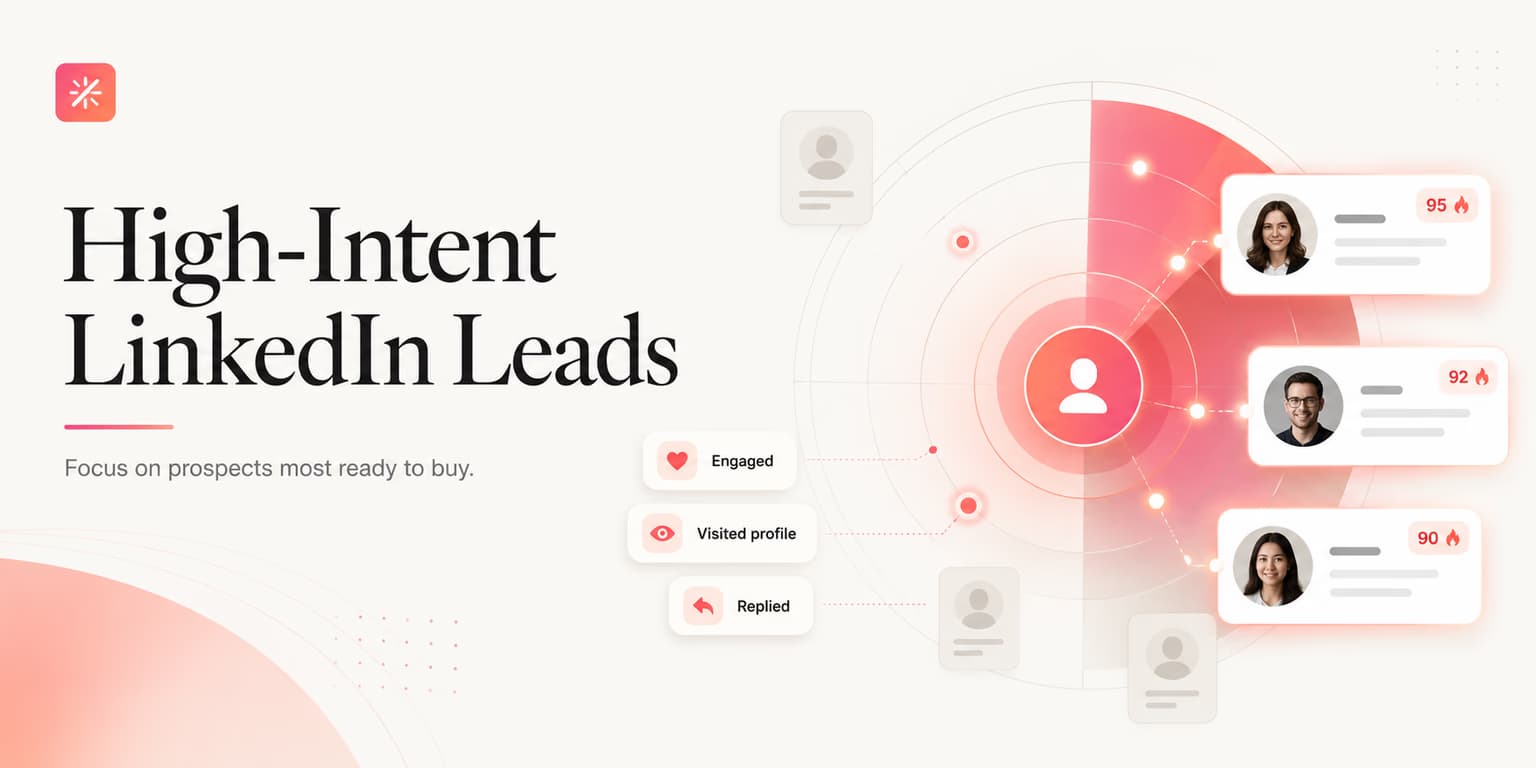
Teams that still get replies have moved from volume-based outreach to signal-led prospecting. Instead of messaging companies that match an ideal customer profile (ICP) but show no signs of active need, they focus on high-intent LinkedIn leads. Those prospects have triggered specific, real-time events that show they are facing a challenge you can solve.
By monitoring these buying signals on LinkedIn, you can make your outreach more timely. A message sent when a company is actively expanding its sales team or when a new VP takes charge has a clearer reason to exist than a generic pitch to a static database row.
Omentir helps you capture this intent without manual searching. Through secure integrations, the platform tracks target signals, filters leads against your ICP, and drafts relevant outreach notes.
The anatomy of a high-intent signal on LinkedIn
An intent signal is any public action or business change that makes a company more likely to need your product or service. On LinkedIn, these signals are visible if you know where to look. Three signals matter most for B2B outbound.
Signal 1: target team hiring and department expansion
When a company lists job openings for specific roles, it is a clear indicator of budget and priority. If you sell a developer tool, a company hiring five new software engineers is a hot lead. If you sell sales software, a company building its SDR team is actively looking for ways to scale outreach.
You can track these openings on LinkedIn Jobs or use advanced filters in LinkedIn Sales Navigator. Tracking hiring signals lets you pitch your solution as a way to help their new hires succeed, rather than a generic product offer.
Signal 2: key executive job changes and promotions
A new executive has a mandate to make changes and budget to spend. When a VP of Sales or Chief Technology Officer starts a new role, they typically evaluate their tool stack within the first 90 days. That makes them more open to outbound.
You should also monitor promotions. A director promoted to VP already knows the company's internal pain points and wants to make a quick impact. Reaching out with a relevant solution during this transition often works better than a cold pitch later.
Signal 3: prospect content creation and comment activity
When a prospect publishes a post or comments on a thread about an industry challenge, they are telling you what is on their mind. If they write about struggling with lead deliverability, and you sell a tool that solves that problem, you have a clear entry point.
Leaving a thoughtful comment before sending a connection request is a useful way to build trust. This warmer approach makes your profile look familiar when your invite lands in their inbox.
Be careful not to overread content signals. A prospect commenting on a topic does not always mean they are buying. Treat content activity as a conversation opener, then look for fit, role authority, and business context before moving the lead into an active campaign.
ICP sourcing tip
Do not just target company-wide updates. Individual buyer actions, like a prospect visiting your profile or commenting on a mutual connection's post, are often stronger signals than a generic press release.
Sourcing intent signals: manual searching vs. AI agents
Once you know which signals to look for, you need a process to source them. Sourcing manually requires a rep to spend hours every day checking Sales Navigator alerts, reviewing job boards, and browsing feed activity. That approach is accurate, but it is hard to scale for a growing team.
The other option is AI discovery agents. Define your target buyer profile and the specific signals you want to track, then let an agent monitor LinkedIn activity in the background. The system aggregates leads that match these criteria, reviews their signals, and puts them into a qualified queue.
Omentir sits between accuracy and automation. You can set up daily discovery agents that search LinkedIn for active buyers. The AI scores each lead against your ICP and lists the exact reasons for the match, giving you a clean list of prospects ready for outreach. You can learn more about this in our guide to ChatGPT LinkedIn prospecting workflows.
Building a fit-to-intent matrix for better scoring
Not all high-intent leads are equal. A lead with high intent but a poor company fit (e.g., a tiny startup with no budget) is a waste of sales time. A perfect enterprise account with no active buying signals might ignore your message.
To prioritize outreach, build a fit-to-intent matrix. This rubric scores prospects on two dimensions:
- High fit / high intent: The primary target. These prospects match your ICP and show active signals (e.g., job change + hiring). Reach out immediately with personalized copy.
- High fit / low intent: Nurture accounts. These are excellent target buyers who show no active signals. Engage with their content and send low-pressure value resources.
- Low fit / high intent: Test accounts. These match some criteria but fall outside your primary target. Use semi-automated templates to test relevance without investing heavy research time.
- Low fit / low intent: Disqualify. These leads should be removed from your active lists to keep your data clean.
Scoring leads with this matrix makes outbound campaigns more efficient. You can find detailed scoring examples in our article on LinkedIn lead scoring rules.
The matrix also prevents overreacting to noisy signals. A job change is interesting, but not enough if the company is outside your market. A perfect-fit account is valuable, but not urgent if there is no sign of current pain. Prioritize the accounts where both conditions are true.
Drafting messages grounded in specific intent signals
Once you have identified a high-intent prospect, your outreach copy must reference the signal immediately. A message that starts with a generic pitch and wraps up with "I saw you are hiring" is obvious automation. The signal must be the actual hook of the message.
Three template examples that use intent signals as hooks:
The hiring hook template
"Hi [Name], saw your department is expanding and currently listing openings for [Role]. Most teams face a drop in output when onboarding new reps. We put together a short checklist showing how to keep scoring rules clean during team growth. Happy to drop the link if you'd like?"
The job change hook template
"Congrats on the new VP role, [Name]. Assuming you are reviewing the sales stack this quarter. We built a lead discovery agent that automates LinkedIn prospecting for solo founders. Thought it might save your group some time. Open to taking a look?"
Notice how these templates do not push a call immediately. They offer a helpful resource or a low-friction question, making it easy for the busy prospect to respond.
Pacing intent-driven outreach to avoid account restrictions
The biggest mistake in signal-led outbound is blasting messages as soon as a signal triggers. If a company gets funded, and you send connection requests to ten executives within five minutes, your activity will look suspicious.
A funding round, hiring spike, or product launch is a reason to write a better note, not a reason to clear the whole buying committee before lunch. Space the first touches across several days so the signal still feels timely without looking like a raid.
Omentir keeps your campaigns safe by running all LinkedIn actions within human-like pacing guidelines. It schedules invites gradually, avoiding the sharp spikes that trigger platform security systems.
If you have multiple team members, each profile should still follow its own safety boundaries and review workflow. Scaling should mean more relevant human-paced conversations, not using more accounts to force volume. For details on scaling, read our comparison of database tools and outreach stacks, like our breakdown of Apollo.io and custom AI layers.
The signal should also appear in the internal record, not only in the message. When a prospect replies, the salesperson should see why the lead was selected and what evidence supported the outreach. That context makes the handoff smoother and prevents the conversation from feeling disconnected.
Put active sourcing into practice
Signal-led prospecting is one of the more reliable ways to improve outbound conversion rates. By monitoring hiring, job changes, and social updates on LinkedIn, you can send outreach notes that have a reason to exist.
Set up Omentir discovery agents to track active buyers, qualify leads using the fit-to-intent matrix, and draft paced outreach notes that can lead to demos.
The strongest signal-led systems are patient. They watch the market, qualify carefully, and move only when the lead has both fit and a reason to care now.
Frequently asked questions
Standard database leads represent static profiles that match your ICP but show no active buying interest. A high-intent lead shows recent activity, such as a promotion, hiring for a relevant role, or posting about a specific business challenge.
Instead of using web scrapers that can get your account banned, you should use official integrations or AI agents connected to your workspace. Omentir monitors discovery pathways securely and drafts outreach within daily safety quotas.
Yes. Your message should reference the specific signal immediately, such as congratulating them on a new role or referencing their recent post, so the note has a clear reason to exist.
Focus on 2 or 3 high-impact signals first: target department hiring, job changes for your core buyer persona, and recent industry posts.