
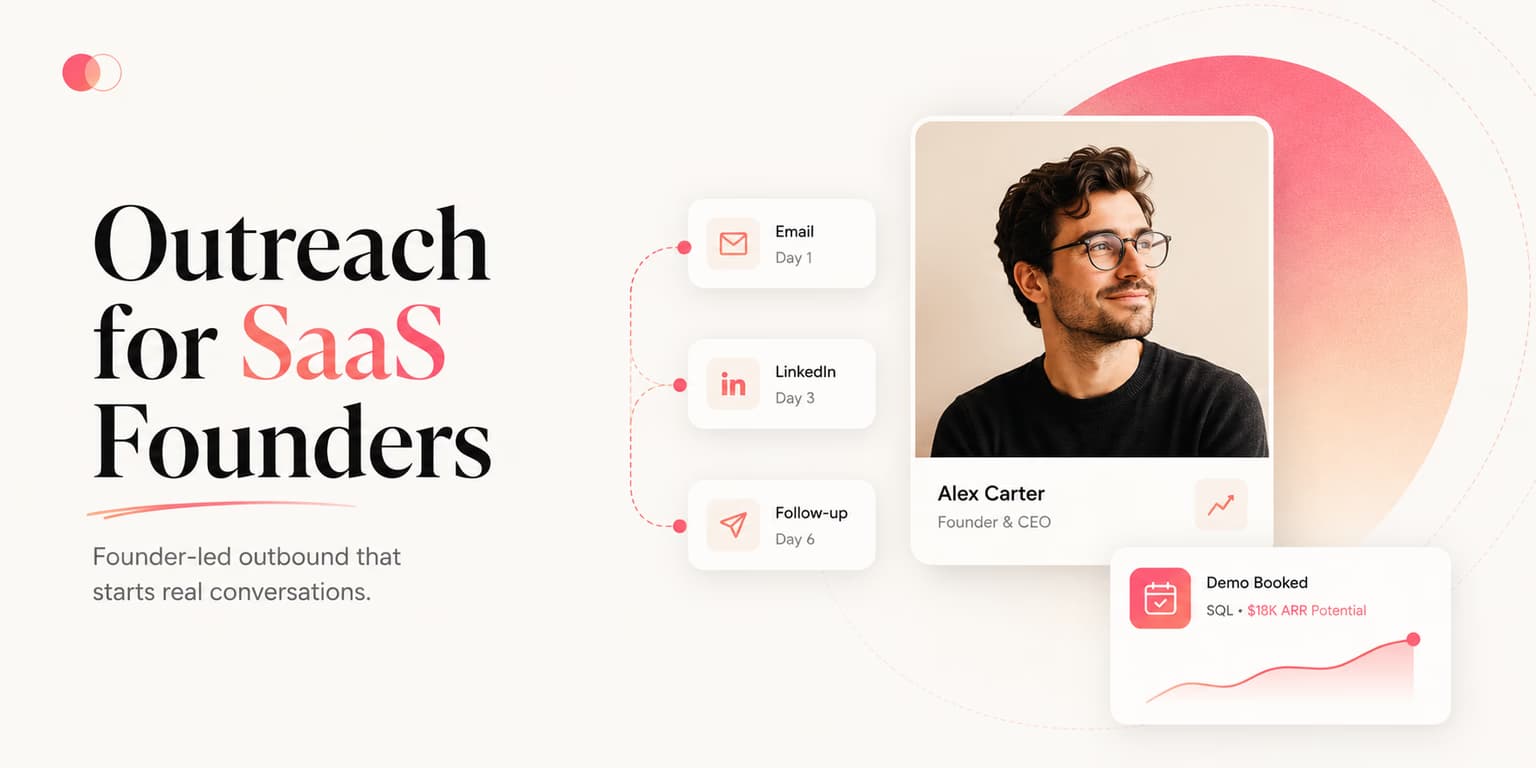
One of the biggest mistakes early-stage SaaS founders make is delegating outbound sales too quickly. They hire a sales development representative (SDR) or an agency to book calls, assuming their time is best spent coding the product. In almost every case, this setup fails.
Hired sales reps can only execute a playbook; they cannot write it. If you have not achieved product-market fit, you do not know which messages get responses or which features buyers actually value. At this stage, outbound is your primary tool for product validation, not only a sales channel.
Running outreach on LinkedIn directly allows you to speak to buyers, hear their objections, and learn what challenges they face. By managing the workflow yourself, you can pivot your product direction based on raw feedback, saving months of wasted dev time.
Omentir is built to support this founder-led outbound motion. The platform runs lead discovery and message drafting in the background, queuing up drafts for your review. This structure lets you stay in control of your copywriting without spending hours on administration. Here is how to run outreach to secure your first design partners.
The goal at this stage is not only revenue. It is learning density. Every reply should teach you something about the buyer, the pain, the urgency, the vocabulary, or the objections. A founder who treats outbound as research will improve the product faster than a founder who treats outbound as a demo-booking machine too early.
Defining your early-adopter ideal customer profile
When validating a new product, do not target enterprise companies right away. Their sales cycles are too long, and they require security checks that early startups cannot provide. Focus instead on early adopters: growth-stage companies with 10 to 50 employees.
Define your Ideal Customer Profile (ICP) based on active signals. Look for companies hiring for roles related to your product, or VP-level executives who have recently started new roles. These buyers are looking for quick wins and are open to testing new tools.
Use prospecting databases like Apollo.io to filter for firmographics, and technology trackers like Clay to verify their current software stack. This research ensures you target only high-fit organizations.
Early adopters usually share three traits: the pain is already visible, the buyer can make a decision without a long committee, and the team is close enough to the problem that feedback will be detailed. A perfect enterprise logo with a six-month procurement process is less useful than a smaller team that will test this week and tell you exactly what broke.
Write your ICP as a learning hypothesis. For example: "Heads of Growth at B2B SaaS teams hiring their first SDRs are struggling with prospect quality and follow-up consistency." That sentence gives you a buyer, a trigger, a pain, and a reason to reach out.
Targeting rule: look for early adopters
Target tech-forward managers and directors who post on LinkedIn rather than traditional C-level executives. They are more likely to test early products and give detailed feedback.
The design partner copywriting strategy
Do not send a product pitch to your first 50 prospects. If you write, "We built a tool that does X, open to a demo?" most buyers will ignore you. Instead, ask for their advice and invite them to become design partners.
This approach shifts the relationship from a transactional sales pitch to a collaborative partnership. Buyers are often willing to share their challenges and feedback with a founder who is genuinely looking to solve an industry problem.
The copy should make the ask feel honest. Do not disguise a sales call as "research" if the real plan is to pitch for twenty minutes. Tell the buyer what you are building, why you think their perspective matters, and what they will get for helping. That clarity builds more trust than fake softness.
Here are two templates designed specifically for founder-led validation.
The feedback hook template
Use this template when reaching out to prospects who match your buyer persona but show no active buying signals:
Feedback hook template
"Hi [Name], saw you are managing the product team at [Company]. I'm a founder building a tool to automate LinkedIn lead scoring and filter out low-fit prospects. We are looking for product feedback from growth-stage builders. Happy to share a short 2-minute video showing what we have built?"
This message works because it is honest, low-friction, and positioned as product feedback rather than a sales pitch. You can find more founder strategies in our guide to outbound sales for solo founders.
After someone says yes, do not rush into a generic demo. Ask what they currently do, where the workflow breaks, what they have already tried, and what would make the product obviously useful. Those answers are more valuable than polite praise.
The collaborative case study template
If your product is live and you need your first case studies, reach out to prospects with a collaborative offer:
Case study hook template
"Hi [Name], congrats on your promotion at [Company]. We are looking for one growth-stage startup to partner with to build a detailed case study around automating lead qualification. We'd set up our tool for free and manage the configuration for you. Open to a brief chat to see if it fits your Q3 roadmap?"
This template works because it provides immediate value (free software and setup) in exchange for their case study participation. For tips on managing early demos, read our guide to the founder's demo playbook.
Be careful with case-study promises. If the product is still changing quickly, frame the partnership as a pilot with permission to document the implementation if it works. That keeps expectations honest and avoids pressuring the customer into a public story before value is proven.
Automating sourcing with workspace discovery agents
SaaS founders are always busy. Spending hours every day searching for leads and checking profiles on LinkedIn Sales Navigator is not a good use of your time.
Omentir automates this sourcing process by using discovery agents. Define your target ICP in your settings, and the platform will search LinkedIn daily. It filters profiles, scores them against your criteria, and deposits them into a lead queue.
This automated system supports a short daily routine. The platform lists new prospects, drafts messages based on their profiles, and stages them in your workspace, allowing you to run outreach without administrative overhead. This daily routine is outlined in our guide on the founder's daily routine.
Setting up a founder-friendly review routine
While automation helps you scale your outbound pipeline, you must review your drafts manually during the validation phase. AI-generated messages can sound generic or miss key profile nuances that a human founder would spot instantly.
Set aside ten minutes every morning to review your outreach queue. Edit drafts to match your personal voice, adjust targeting rules when you notice poor-fit profiles, and check that all links resolve correctly.
Omentir supports this review routine by staging all campaign drafts inside your workspace drafts. It does not send messages automatically; it holds them in a review queue, allowing you to approve or edit each note before it is sent.
Keep a small learning log next to the queue. Track which segments reply, which objections appear, which words prospects use, and which features they ask about. After two weeks, this log becomes more useful than a dashboard because it shows the qualitative pattern behind the numbers.
Founders should also review rejected leads. If the queue keeps surfacing poor-fit companies, your ICP rules are too broad. If the leads are good but the copy feels awkward, your message needs more founder voice. If the copy is good but replies are weak, the pain may not be urgent enough.
Managing outbound cadences and account security
Founders usually break pacing in week two, not week one. Week one is careful. Week two is "this is working, let's do 80 invites." The account that booked two conversations then sits in a checkpoint.
Pick a daily invite number you can keep for a month without a hero day. Review every first note yourself until the phrasing is boringly consistent. Raise volume only after a full week at the current cap still looks like a person who has a job besides LinkedIn.
Conservative pacing is also better for learning. If you send too many messages before reading the replies, you may scale the wrong pitch. Slow batches help you adjust targeting and copy while the campaign is still small enough to steer.
SOP: the founder-led outreach checklist
Use this simple checklist to audit your validation campaigns before launching:
- Confirm Targeting: Are you targeting growth-stage companies with 10 to 50 employees to ensure quick sales cycles?
- Audit Copy: Does your first touch ask for product feedback or case study collaboration rather than a sales call?
- Check Pacing: Is the campaign configured to stay within daily safety quotas?
- Verify review: Are all messages staged in drafts for manual approval rather than sent automatically?
- Test Links: Do all calendar and video links resolve correctly?
Add one more checklist item: define what you need to learn before the campaign starts. Are you testing the pain, the persona, the offer, the pricing, or the onboarding promise? If you do not name the learning goal, every call will feel vaguely useful but nothing will compound.
After each week, review the campaign like a product experiment. Keep what produced specific replies. Rewrite what produced polite silence. Remove segments that created curiosity but no urgency. This is how founder-led outreach turns into product strategy.
Stay close to the problem
Founder-led outbound is a reliable way to validate a B2B SaaS product and secure your first design partners. Write modular, feedback-focused templates, manage the campaigns daily, and use the replies to decide what to build next.
Let Omentir handle the logistics. Configure your discovery agents, review your drafts every morning, and run paced sequences that turn warm LinkedIn leads into customer conversations.
The founder's advantage is proximity to the problem. You can hear a buyer's objection and change the product, the ICP, or the positioning the same day. Use automation to protect that advantage, not to distance yourself from it.
Frequently asked questions
When a founder runs outreach, they gather qualitative feedback on product pain points, competitor gaps, and feature demands that a hired salesperson would miss. That feedback is how you get to product-market fit.
A design partner is an early customer who collaborates with you by providing product feedback in exchange for discounted pricing, custom features, and dedicated support. They help validate your solution and build initial case studies.
Omentir automates lead discovery and message drafting in the background, placing drafts in a review queue. This lets founders spend their limited outbound time on reviewing prospects, improving copy, and learning from replies.
No. Pitching in the connection request feels spammy and drives low acceptance rates. Focus on a brief, professional context note or send a blank invite to start a relationship first.