Free plans
Free email marketing: what the tier actually includes
Free plans exist. They cap contacts, monthly sends, and branding. When they work, when they stall, and an honest look at Mailchimp's free tier.
Free means capped, not unlimited
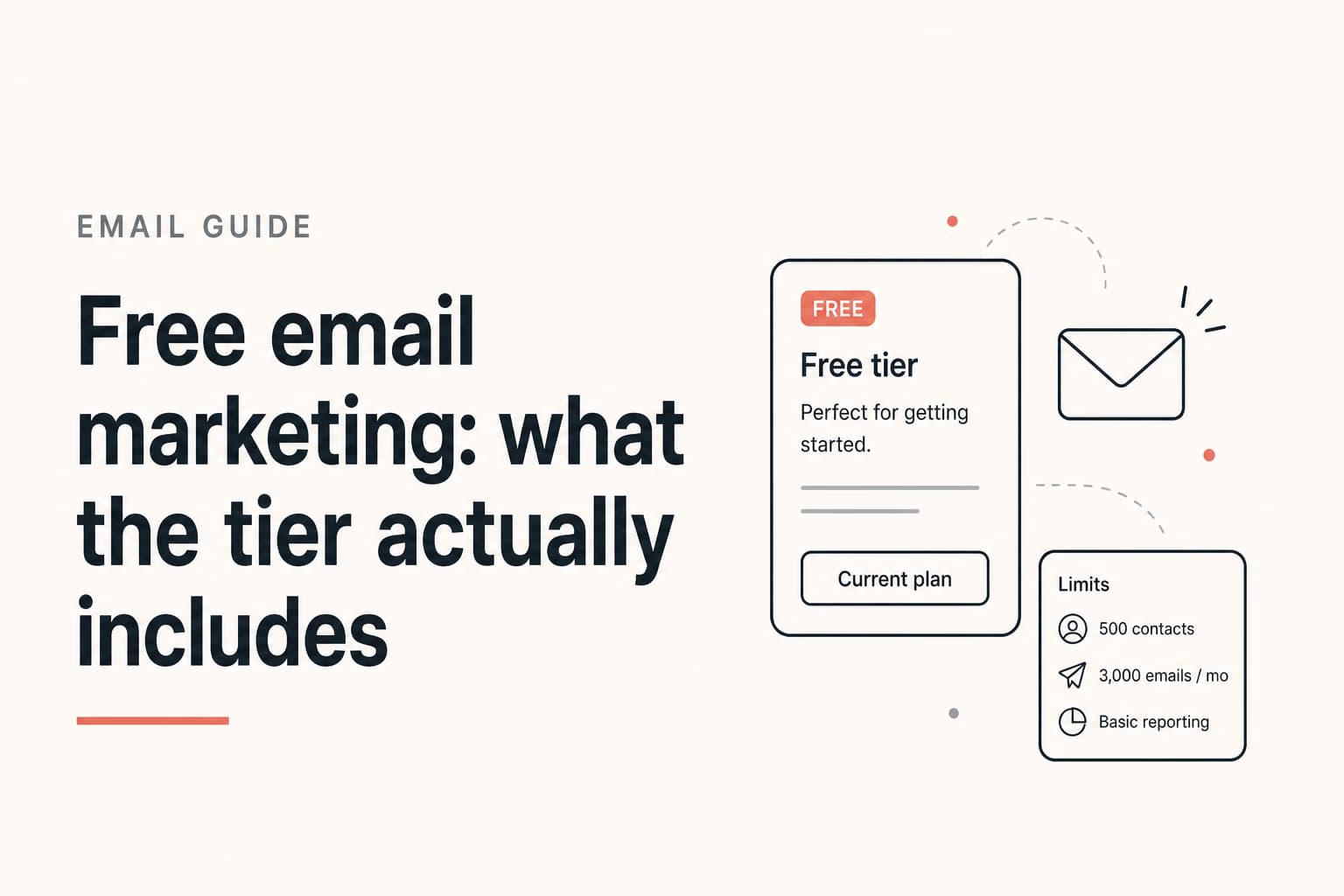
Almost every consumer ESP offers a free tier because it is a trial with a public price of zero. Typical limits: a contact cap, a monthly send cap, a Mailchimp-style branded footer, fewer automations, no A/B tests, and weaker support. The numbers move every year, so treat any screenshot of '2,000 contacts' as historical. Open the current plan page before you promise a client the tier still exists.
Free is enough for a new newsletter, a local shop, or a founder who sends one note a month to people who already bought. It is not enough for a store with a real abandon flow, a B2B team with lifecycle branching, or anyone who cannot live with the vendor's logo on the footer.
Free tier
Caps on contacts, sends, or branding
Outgrow signal
You hit the cap or need auth and a real footer
Mailchimp, without the myth
Mailchimp is still the name people type when they want free email marketing. Intuit owns it. The free plan has historically limited contacts and sends, shown Mailchimp branding, and held back some automation and comparison tools for paid tiers. That mix is why it became the default classroom ESP: you can learn the object model (audience, campaign, tag) without a card. It is also why ecommerce teams outgrow it. Klaviyo prices on profiles and is built around store events. Mailchimp can connect a store. Klaviyo assumes the store is the center.
Mailchimp is not 'the professional choice' or 'only for amateurs.' It is a general-purpose ESP with a famous free door. If your list is a newsletter and a few tags, it is a reasonable place to stay. If your revenue depends on browse-abandon and post-purchase flows, you will feel the ceiling. Confirm limits on their site. They change.
When you outgrow free
You outgrow it when the contact cap is the planning constraint, when you need customer-data events (placed order, viewed SKU) as triggers, when you want a dedicated sending domain without fighting the UI, or when the branded footer is embarrassing in a sales cycle. You also outgrow it when support tickets wait because free users are last.
Other free-ish doors exist: Brevo (daily send caps are a different shape of limit), Kit for creator audiences, Google groups for tiny internal lists that are not really marketing. None of these replace DNS authentication. SPF, DKIM, and a custom domain are email-aisle setup even on a free plan. Warmup still applies if you suddenly send to thousands of cold-ish addresses you imported. Free software does not grant inbox placement.
Common questions
Is free email marketing safe for a real business?
Safe enough if the list opted in and you authenticate the domain. The risk is operational: hitting a cap mid-launch, or looking unpaid because of vendor branding. It is not inherently spammy. Behavior and list quality decide that.
Should I start on free and migrate later?
Yes if you want to learn. Export the audience, tags, and unsubscribes before you switch. Migrations fail when the old account is the only copy of suppression. Budget a week of broken automations. There is no painless ESP move.
Related
Prefer markdown? Free email marketing: what the tier actually includes.md