
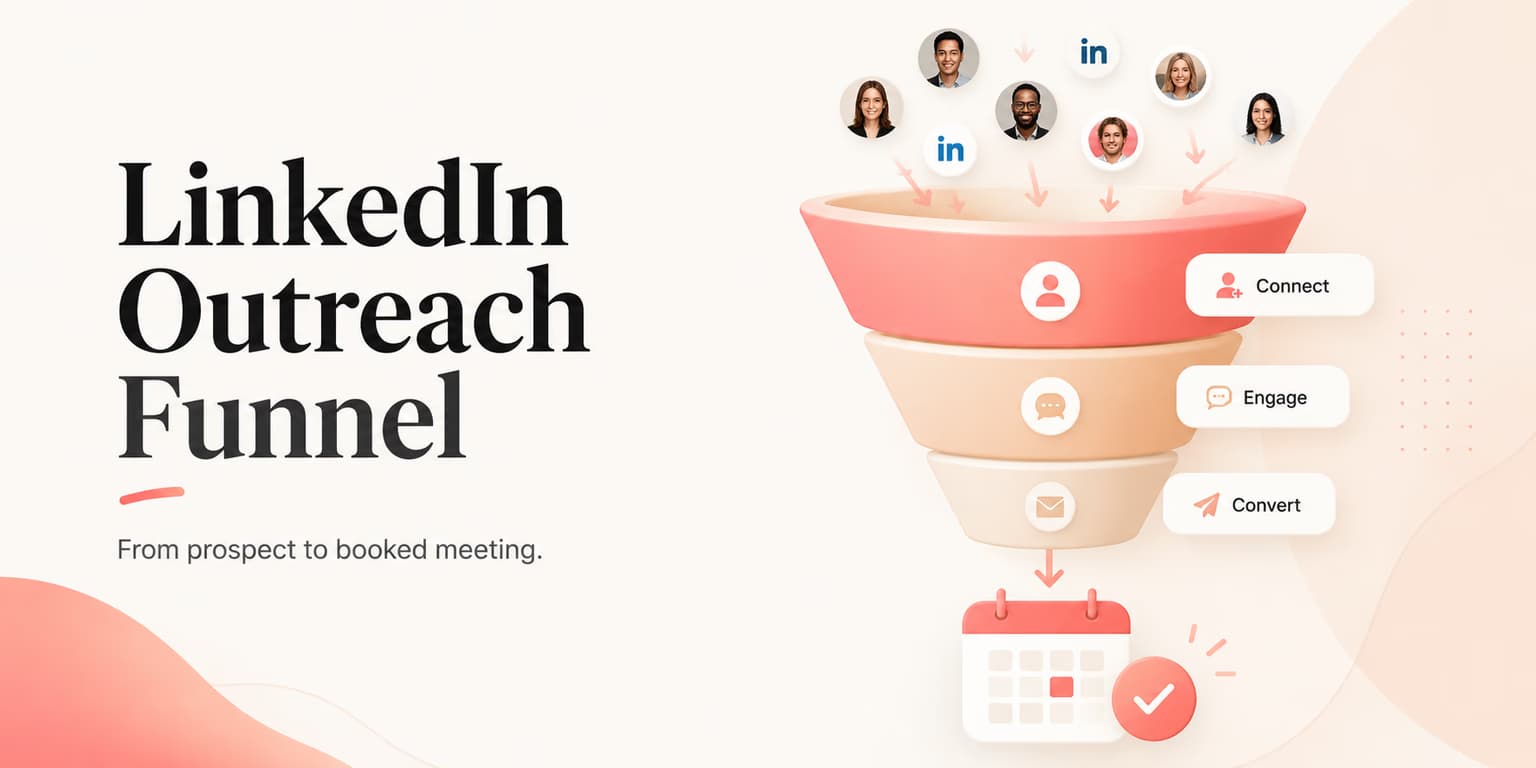
Many sales teams evaluate their outbound success solely by the number of booked meetings at the end of the month. While meetings are the ultimate goal, focusing only on the final outcome hides the specific points where your sales pipeline might be leaking. If your campaigns are not generating demos, the issue could be a low connection acceptance rate, slow response times, or weak message copywriting.
Mastering B2B sales requires viewing your outreach as a structured conversion funnel. Every step, from the first profile visit to the scheduled calendar invite, has its own metrics, challenges, and optimization rules. By isolating and improving each stage, you can increase your output without needing to source more leads.
Omentir helps growth teams track this funnel with a clean execution interface. It runs lead discovery, scores fit, schedules safe campaigns, and collects replies in an intent-sorted inbox. The rest of this article covers conversion metrics of a LinkedIn outreach funnel and how to patch leaks at each stage.
To build a predictable outbound machine, you must understand how stages compound. A small improvement at the top of the funnel can disappear if replies are weak, and a great reply rate can still fail if handoffs are sloppy. This is why strong teams optimize the whole path instead of celebrating one isolated metric.
Stage 1: profile views and first impressions
The top of the LinkedIn funnel begins before you ever send a message. When you target a prospect, they will almost always click on your name to inspect your personal profile. Your page is the landing page for your outreach: if it looks like a generic sales resume or a spam account, the prospect will ignore your connection request.
Optimizing your profile is about shifting from self-promotion to problem-solving. Your headline should not just state your job title; it must explain the specific outcome you help buyers achieve. Your about section, banner image, and featured links must provide immediate social proof and direct value.
A professional, value-first profile is the foundation of outreach that converts. If you want to double your acceptance rates, read our guide on optimizing your LinkedIn landing page. This setup sets a trust boundary that makes prospects feel comfortable accepting your invitations.
Headline and about section
Your profile headline is the most visible piece of real estate. Avoid standard formulas like "Sales Director at Acme Corp." Instead, use a formula that states the benefit: "Helping B2B startups automate lead qualification without losing the personal touch." This instantly tells the visitor what you do.
Your about section should expand on this hook. Do not write a long essay about your career history. Focus on the core problems your target audience faces, the process you use to solve them, and clear evidence of past success. Keep paragraphs short and use bullet points for easy scanning.
Stage 2: connection request acceptance
Once a prospect visits your profile, they decide whether to accept your connection invite. This is the first critical gate in your outbound funnel. A low acceptance rate indicates that your target list is too broad or your introductory message feels like an immediate pitch.
If relevant prospects are not accepting, review your parameters. The best invites are either completely blank or use a light, context-driven opening note. Never include a product pitch or a calendar link in the connection request.
Omentir keeps this stage highly efficient by using context-aware lead discovery agents. It identifies buyers who fit your ICP and drafts connection requests tailored to their recent activity or role requirements. You can learn more about this process in our resource on writing high-converting connection notes.
Funnel Metric: Connection Acceptance
If acceptance quality drops, narrow your ICP parameters, simplify the invite, and check whether your profile clearly explains why the right buyer should trust you.
The psychology of connection acceptance
Acceptance is based on mutual relevance and trust. When a prospect receives an invitation, they ask themselves two questions: "Do I know this person?" and "Will connecting with them clutter my inbox?"
If your profile looks like a generic vendor page, the prospect will assume a pitch is coming and click decline. Sending a blank invite can actually increase acceptance rates because it removes the sales expectation. It triggers the prospect's curiosity, prompting them to view your profile and decide based on your headline value.
Stage 3: message reply rates and copy rules
After a prospect accepts your connection request, you enter the messaging stage. This is where most outreach funnels break down due to copy fatigue. Sending long, generic paragraphs detailing your product features is the fastest way to get ignored or reported as spam.
To improve this stage, keep your messages short and focus on a single relevant challenge. Introduce a soft value proposition or offer a useful resource rather than asking for a meeting immediately.
Omentir's copywriting engine drafts messages based on your pre-configured product profile, avoiding the generic patterns common in automated outbound tools. You can customize the draft sequences to match your brand's voice. Check out our guide on B2B outreach copywriting frameworks for detailed structures that spark conversations.
The key is keeping the friction low. Instead of asking for a 30 minute calendar invite, ask for permission to send a short video or a PDF guide. This shows respect for the buyer's calendar and makes it easy for them to reply with a simple yes.
Stage 4: demo booking and handoffs
The final stage of the outbound funnel is turning a reply into a scheduled meeting. This is often the point of highest leakage because sales representatives get impatient and drop calendar links before establishing real interest.
When a prospect replies with interest, respond with a short, conversational note that addresses their specific comment. Ask a qualification question to confirm fit before suggesting a time, and offer to coordinate the booking manually if they prefer.
Omentir simplifies this handoff by organizing all responses in a unified inbox sorted by intent. The AI filters out noise like Out of Office or Refusals, highlighting only the warm leads that need your attention. Read our playbook on demo booking best practices to learn how to guide these conversations to scheduled calls.
Remember, scheduling is a human conversation. While an AI agent can flag the interest, you should manage the calendar transition to ensure a smooth prospect experience. Make sure to follow up within 24 hours of their reply to keep the momentum active.
The handoff should include context. Before replying, review what signal started the conversation, which message they answered, and what they asked for. A fast reply that ignores context is worse than a slightly slower reply that actually advances the conversation.
Stage 5: spotting funnel leakage and auditing
To maintain a healthy sales pipeline, you must audit your funnel metrics regularly. Set up a simple weekly tracking sheet that monitors the conversion rates between each stage:
- Low acceptance: Indicates that your profile may not be optimized or your target buyer list is too broad. Solution: Narrow your filters and update your profile banner.
- Low reply quality: Suggests that your message copy is too long, self-centered, or irrelevant. Solution: Shorten your messages and lead with a resource or question.
- Low booking quality: Shows that you may be rushing the scheduling step or failing to qualify interest. Solution: Use intent sorting and respond with context.
This continuous audit loop helps you address the root cause of pipeline drops. Instead of guessing why your campaigns are quiet, you can look at the conversion data and apply the specific fix needed.
Leakage patching framework
When you spot a leak, do not change every variable at once. Follow a single-variable testing framework. If your acceptance rate is low, change only your profile headline or your connection message for one week and monitor the change.
If your reply rate is low, rewrite only your follow-up sequence. By isolating your changes, you can verify which adjustment had the positive impact. This methodical optimization builds a highly efficient and stable outbound engine over time.
Keep a note beside each test explaining why you made the change. Otherwise, the funnel becomes a pile of random experiments. The goal is to learn which buyer segment, profile promise, message angle, and handoff style work together.
Optimizing for revenue
A high-performing outbound engine is built on details. By optimizing your profile, connection requests, messaging cadence, and scheduling handoffs, you can build a reliable sales machine that books demos consistently.
Let Omentir handle the details of this workflow. Use its automated discovery, scoring algorithms, and compliant message drafting to keep the top of your funnel full, while you focus on closing the warm opportunities that reach your inbox.
Funnel optimization is really conversation design. Every stage should make the next human interaction easier, clearer, and more relevant.
When the funnel is healthy, prospects understand why you connected, why the message matters, and what simple next step makes sense.
Frequently Asked Questions
It depends on your niche, profile strength, and targeting quality. Treat acceptance as a diagnostic: if relevant prospects consistently decline, review your ICP, profile, and invite style.
Divide scheduled meetings by accepted connections, then review the quality of those meetings. A lower number of qualified calls is better than a higher number of weak-fit demos.
Most leakage occurs at the reply-to-booking stage. Sales reps often drop calendar links too early or fail to follow up within 24 hours of receiving a prospect's initial reply.
No. Pitching in the connection request is a primary driver of low acceptance rates. Keep the invite invite-only or use a brief, context-based line with zero sales jargon.