
In B2B outbound, speed often gets treated as the only metric. Teams brag about thousands of cold emails and LinkedIn messages a week, as if outbound were only a numbers game. That view pushes people toward bulk scrapers and high-volume sequencers that optimize for send count, not reply quality.
Bulk outreach is a worse bet than it used to be. Social platforms and email networks now run detection that is good at spotting automation. Blast a generic message at a huge list and accounts get flagged, deliverability drops, and the brand looks cheap. Speed was the illusion. Restricted profiles and empty pipelines are the bill.
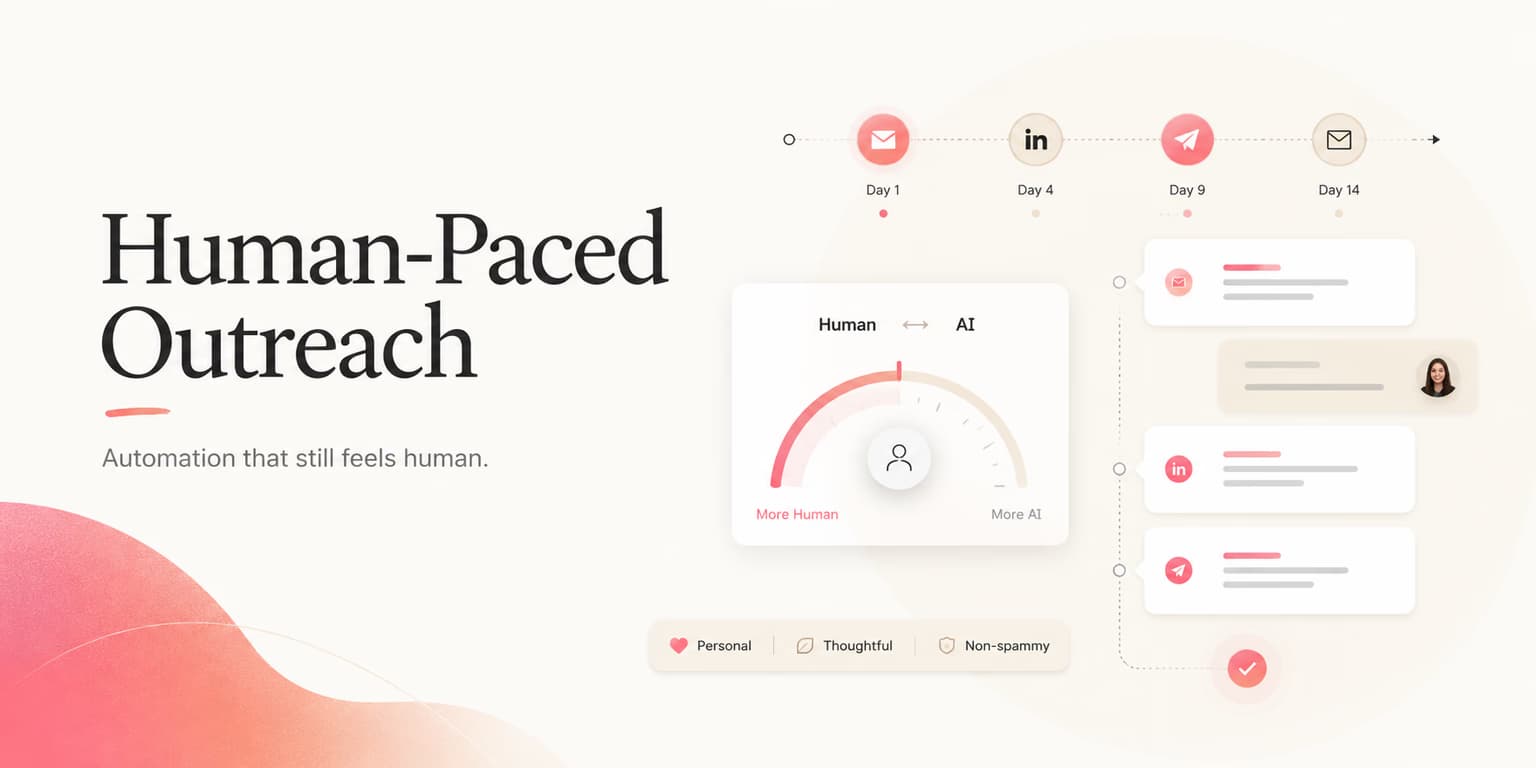
Omentir is built around human-paced outreach. It acts as an AI sales assistant that copies the rhythm of a person using LinkedIn: paced messages, daily budgets, and a human review step before send. That protects the account and keeps the copy relevant. The rest of this piece covers why that beats bulk spam, both technically and for the buyer.
Outbound is a long race. Teams that still have a pipeline in 2026 are the ones that send a steady flow of well-chosen connection requests, week after week, without burning the profile.
Human-paced outreach ties volume to account health, list quality, message quality, and reply capacity. If any one of those weakens, slow down and fix the constraint.
How platforms detect automation
Platforms like LinkedIn look for patterns that do not look like a person using the product. They mainly watch three things: how often you act, how evenly the actions are spaced, and whether something is manipulating the interface.
Frequency detectors trigger alerts when an account performs an unusually high number of actions in a short period, such as viewing 500 profiles or sending 100 connection requests in an hour. Interval checks analyze the spacing between actions: if every invite is sent exactly 45 seconds apart, the system flags the pattern as automated. Interface checkers monitor browser extensions, identifying scripts that interact directly with the web page code.
The exact detection rules are not public and can change, so treat every hard number you see online as a rough operator rule rather than a guarantee. The stable principle is simpler: sudden spikes, robotic repetition, low acceptance, and poor reply quality all create risk.
If the sales tool uses browser extensions or rapid scraping scripts, the profile is exposed. For how automated SDR systems compare on safety, see our comparison of AI sales agent alternatives. Browser clicking is the risk. API connections are the safer path.
Why browser scripts get caught
Modern social applications run extensive client-side code that monitors browser environments. They track page mouse movements, button click vectors, and element load timings. When a browser extension manipulates a web page element (like clicking a connection button via JavaScript code), it bypasses these physical tracking indicators.
The security engine spots this mismatch instantly. It notes that an input occurred without matching cursor movements or device triggers, concluding that a script is operating the page. This direct client-side detection is why chrome extension scrapers are highly vulnerable to platform jail.
Even when a tool works today, brittle browser automation creates an operational risk. Page structures change, selectors break, and accounts can be exposed to behavior the user did not intend. A safer outreach stack should make actions explicit, logged, paced, and easy to pause.
Set daily and weekly outreach budgets
A compliant pipeline starts with a daily budget you will not exceed. Do not chase the maximum. Pick a limit that fits the account's age and history, then run campaigns inside it.
- Connection Invites: Keep invite volume conservative and adjust based on profile age, account history, acceptance quality, and recent warnings.
- Profile Research: Avoid sudden spikes in profile activity. Let your discovery agent collect and review prospects gradually.
- Direct Message Follow-Ups: Keep follow-up volume low enough that a human can review replies and stop sequences when needed.
These budgets keep the profile inside a range that looks normal. It feels slow. The point is that the account is still there in six months. More detail is in prospecting workflows and limits.
The math of a safe profile warmup
If your account has been inactive for several months, launching a campaign immediately at full daily quotas is a major mistake. Sudden activity spikes trigger security alerts, placing your profile in a temporary verification jail.
To prevent this, use a linear warmup progression. Start with a daily limit of 3 connection requests and 5 direct messages. Increase these limits by 2 additional connection requests and 3 direct messages every three days until you reach your target daily budget (15 connections and 20 messages). This progressive ramp-up mimics a natural return to networking, establishing trust with platform algorithms.
A better way to think about warmup is behavior consistency. If an account has been quiet, begin with normal human actions: review profiles, accept relevant inbound requests, reply to existing conversations, and send only a small number of high-fit invites. Increase activity only when the account shows healthy acceptance and no delivery issues.
Why pacing also changes how buyers react
Pacing is also how the buyer experiences you. A connection request followed immediately by a long pitch reads as automated spam. People decline it.
Paced outreach creates a respectful communication window. By leaving a gap of 3 to 5 days between connection acceptance and your first message, you separate the invitation from the sales context. The interaction feels like a natural networking step rather than an automated sequence, which increases the likelihood of a reply.
This pause also gives the prospect time to view your content. If you share useful insights or engage thoughtfully during this window, the prospect may recognize your name before the first message arrives. That familiarity makes the conversation feel less abrupt.
Pacing also protects your team. If too many replies arrive at once, quality drops. Reps rush answers, miss objections, forget context, and let good conversations stall. A slower flow gives each reply a better chance of becoming a real sales conversation.
API integrations vs unsafe scrapers
The connection method is what decides whether the account lasts. Many tools scrape by manipulating the browser DOM. Security layers catch that.
Safer platforms avoid brittle browser scripting where possible and use integration layers designed for communication workflows. This approach makes actions easier to coordinate, monitor, and pause.
Omentir supports this execution path by integrating with Unipile, an API connector for communication networks. Omentir then layers review queues, daily quotas, and pacing rules on top. Check our guide on outbound campaign setups to see how to configure compliant parameters.
The Safe Warm-Up Standard
When connecting a LinkedIn profile to an outreach workflow, start conservatively, watch for account health signals, and increase activity only after the profile behaves normally.
Configure safe pacing in Omentir
Omentir provides dedicated safety settings that let you customize pacing boundaries. You can define daily send limits, set random delay intervals between messages, and schedule active execution windows to match your local timezone.
The key is avoiding mechanical patterns. Instead of executing every action on a fixed interval, use natural sending windows, conservative queues, and enough spacing that the activity resembles a real workday rather than a script.
Omentir also groups outreach drafts in a queue so you can review copy before it sends. That human-in-the-loop gate keeps the messages honest while campaigns still run. See AI lead qualification pipelines for setup details.
Configure stop rules as seriously as send rules. If someone declines, objects, replies with low intent, or asks not to be contacted, the sequence should stop. Human-paced outreach is about respecting the buyer's signal, not simply slowing down automation.
Pipeline that still exists next quarter
In B2B sales, patience is an advantage. High-volume spam can produce a spike of vanity metrics. It also wrecks deliverability and puts the account at risk.
Human-paced outreach is how you keep a pipeline without burning the brand. Use Omentir's Unipile connection, lead grading, and approval queues to run campaigns that stay inside the account's limits and respect the buyer's inbox.
The teams that win with outbound are not the ones that send the most. They are the ones that can keep sending relevant messages from healthy accounts for months without burning trust. Human pacing is the operating discipline that makes that possible. It keeps the pipeline alive long enough for the right buyers to respond, and it gives trust room to compound instead of forcing attention.
Frequently Asked Questions
LinkedIn is trying to keep spam out of the product. Rapid actions, identical intervals, and high daily volume trip automated abuse detection. You get a temporary lock, or a permanent ban.
There is no universal safe number. Mature, active profiles can usually handle more than new or inactive ones, but the safest approach is conservative daily quotas, gradual ramp-up, and close monitoring for failed sends or low acceptance.
Browser extensions often depend on page automation, which can be fragile and risky. API-based integration layers like Unipile are cleaner for product workflows, but you still need conservative pacing, account monitoring, and safe message quality.
Yes, but space them naturally and use an approval queue to review drafts before sending. Follow-ups should stop immediately when a prospect says no or asks not to be contacted.